The California Department of Education recently released updated guidance on the use of artificial intelligence in TK–12 education. While much of the guidance reinforces ideas already circulating in education spaces, its significance lies in what it signals: a clear shift in expectations for school and system leaders.
This guidance makes it clear that AI is no longer a future consideration; it is a current leadership responsibility.
What the Guidance Reinforces
At its core, the CDE guidance emphasizes:
- Keeping humans firmly in the loop
- Using AI to enhance, not replace, professional judgment
- Addressing equity, access, and digital citizenship
- Preparing educators and students to engage with AI critically and ethically
- Investing in professional learning, not just tools
For leaders, this marks a transition from experimentation to system-level stewardship.
The Emerging Expectation for Leaders
The guidance implicitly asks leaders to:
- Set clear norms and guardrails for AI use
- Build shared understanding across staff, not pockets of expertise
- Reduce inequities in AI literacy, not widen them
- Ensure AI decisions align with instructional goals, not convenience
- Model ethical reasoning and reflective practice
The leadership shift to consider is moving from a focus on tools to designing the conditions where educators feel supported to use AI thoughtfully and in service of teaching and learning.
Where CALIE Fits and Why This Matters
As I read through the newly published guidance from CDE, it validated the direction our members are already moving.
Our AI Leadership Academy prepares leaders to navigate exactly these challenges — focusing on human-centered decision-making, ethical use, and strategic implementation.
Our AI Foundations learning path in the Professional Learning Hub supports AI literacy, digital citizenship, and equitable access — all key pillars emphasized in the state guidance.
Across our programs, we emphasize that AI is a leadership conversation first, and a technology conversation second.
This alignment isn’t accidental. It reflects a broader shift in education — and CALIE’s role in helping leaders make sense of complexity rather than wait for prescriptive answers.
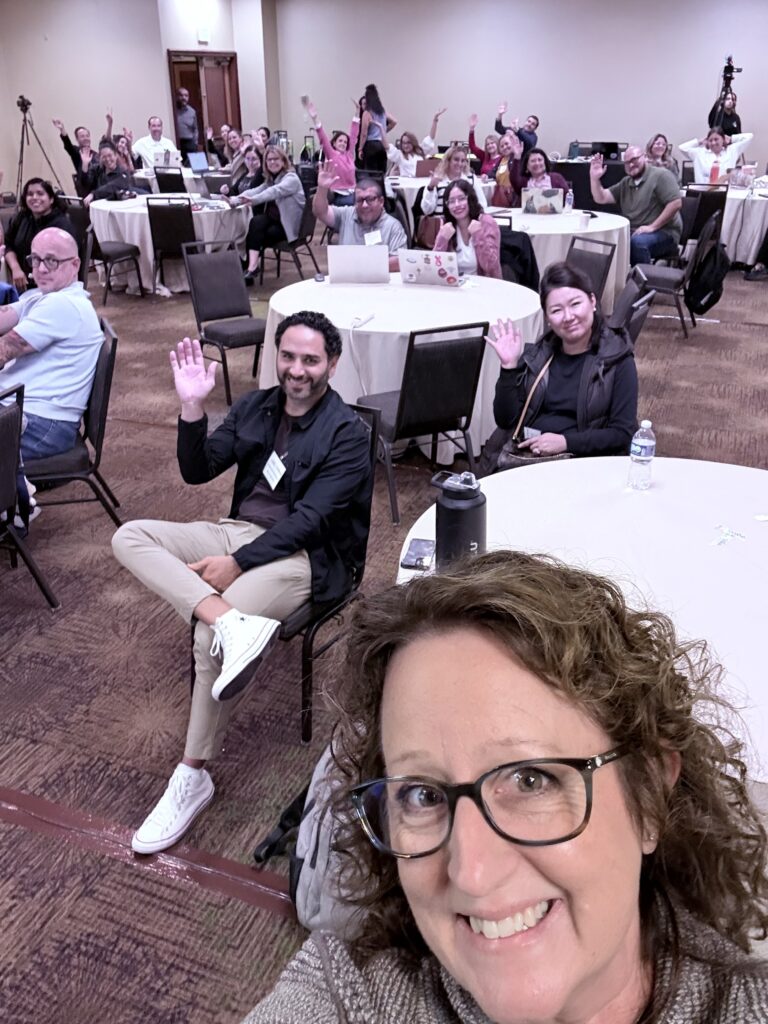
“The leadership shift to consider is moving from a focus on tools to designing the conditions where educators feel supported to use AI thoughtfully and in service of teaching and learning.”
Rae Fearing
Director of Programs, CALIE
A Practical Leadership Move You Can Make This Week
If you’re wondering where to start, here’s a simple, high-impact step: Choose one setting, your classroom, team, or site, and articulate what “keeping humans in the loop” actually looks like in practice.
That might mean:
- Clarifying when AI is appropriate support and when it isn’t
- Discussing how decisions will be reviewed, not automated
- Naming what ethical use looks like in your context
This kind of clarity builds confidence and trust far more effectively than any single tool rollout.
A Leadership Belief I Hold Firmly
I believe deeply in educators as leaders who are willing to move with intention, grounded in values and professional judgment, even when guidance leaves room for interpretation. My commitment is to support that sense-making work and help leaders reflect, build confidence, and move forward with clarity rather than wait for perfect certainty.
Rae Fearing
Director of Programs
Resources:
CDE Webinar: Guidance for the Safe and Effective Use of Artificial in California Public Schools that occurred January 15th, 2026.
Click here to view the recording of this session.
Click here to view CDE AI guidance page.
Other News
 News
News
From CUE to CALIE: Why I’m All In (And I Hope You Will Be Too)
When was the last time you used the word “computer” in your practice? I asked myself this question recently, and...
 News
News
Simple Steps for Crafting a District AI Policy: How to share this infographic with school leaders
If you’ve been paying attention to how tech is transforming education this past year, you know AI is on the...
 News
News
Leading the AI Charge: Community Colleges and K-12 Schools Set to Shine
In a recent press release from the US Senate Committee on Commerce, Science, and Transportation, U.S. Senators Maria Cantwell (D-Wash.) and Jerry...