UDL-Con at Spring CUE 2026 will strive to support education leaders working to align vision, instruction, and outcomes across universally designed, learner-centered systems.
Why an Edtech Event for CAST?
The intersection of accessibility, Universal Design for Learning (UDL), and educational technology represents a powerful space where innovation and learner agency grows. Digital accessibility ensures that all learners, including those with disabilities, can engage with digital content and tools. When leaders collaborate and understand the power of UDL and how accessibility drives opportunities for each learner, systems change and students succeed.
The Power of the Edtech and UDL Communities
“The passion shared by EdTech and UDL leaders is not only powerful, but it’s also contagious.”
As a former classroom teacher, inclusion leader, reading coach, and ESL coordinator, I’ve spent my career championing seamless access to meaningful learning opportunities. Nearly twenty years in the edtech space, leading professional learning communities, designing in-person and virtual events, and developing tools and white papers to strengthen high-quality digital learning, have shown me just how transformative thoughtful, accessible technology integration can be. My four years at CAST, working deeply in the inclusive technology space, have highlighted how that shared passion between edtech and UDL leaders is real and contagious.
That’s why I’m so excited that this event will showcase the true impact of Universal Design for Learning and how accessible technologies can streamline and personalize learning for every student. As the Co-Project Director of the Center on Inclusive Technology & Education Systems (CITES), a federal center dedicated to helping school district leaders develop and sustain technology systems that support all learners, including students with disabilities who rely on assistive technology and accessible materials, I find UDL-Con at Spring CUE inspiring. The concept embodies the spirit of inclusion, innovation, and possibilities we value as we work toward an accessible future for all learners.
Accessibility Is the Minimum. Inclusion Is the Goal.
Accessibility is the baseline of UDL. UDL opens opportunities and encourages instructional design that anticipates learner variability. A research-based framework, the CAST UDL guidelines provide educators and designers the ability to create instructional experiences that offer multiple means of engagement (the “why” of learning), multiple means of representation (the “what”), and multiple means of action and expression (the “how”).
UDL is based on scientific insights into how humans learn and is supported by evidence to benefit learners of all ages and across learning contexts. The goal of UDL is learner agency that is purposeful and reflective, resourceful and authentic, and strategic and action-oriented. Many edtech tools fundamentally support UDL implementation as they often provide options for educators and students.
UDL in Action at Spring CUE
All Spring CUE attendees have the option to join the powerful UDL-Con sessions to build their leadership and implementation of UDL. Over twenty accessible, universally designed sessions will explore a variety of topics, including accessible AI and assistive technologies, and UDL in action via drones, literacy, people-centered pedagogy, and schoolwide success.
Leaders can learn how drone-based STEM lessons use multiple modalities to support inquiry for students who learn in diverse ways. Literacy specialists will highlight how accessible materials and technologies can transform literacy instruction.
Don’t miss special sessions with free tools, including research-based online graphic organizers, Multi-tiered Systems of Support (MTSS) resources aligning to inclusive tech, a hands-on card game to educate leaders on the myths and facts of assistive technology implementation, and UDL-aligned coaching resources for science educators.
Across the conference, participants will see that UDL is not an add-on. It is a mindset that transforms every classroom, every learner, and every system.
Check out all of CAST’s sessions at Spring CUE, and register for UDL-Con today!
Christine Fox is Chief Growth and Innovation Officer at CAST, leading business development, sales, design, marketing and communications to support CAST’s mission.
I was at dinner recently with a friend, and we were comparing travel calendars for next year. We’re both planning to attend our professional association’s national conference in August.
She hesitated before saying, almost apologetically, “I’m kind of embarrassed how much I look forward to this conference.”
I told her not to be embarrassed – I look forward to it every year!
Not necessarily because of a particular keynote or session. I look forward to it because it brings me back into a room with my people.
When you’re responsible for leading any kind of change, whether that’s in a classroom, a district office, or a non-profit, much of the decision-making happens alone, and you rarely get to compare notes in real time with people facing the same dynamics. That’s what I value most about an in-person conference: proximity to my existing network and new connections.
What a Conference Actually Does
Of course, as executive director of CALIE, I also care about strong programming, and I know structured sessions matter. At CALIE, we invest time designing learning experiences that are timely and practical. But I also understand that the most important outcomes of a conference won’t always be captured in session evaluations, since they often emerge in conversations between sessions. How do you quantify what you learned in exchanges that begin with, “Have you tried this?” How many times have you returned from a conference with the realization that a problem you thought was unique to your district is actually systemic?
From where I sit, a conference is about creating the spaces for those conversations to happen.
Educators operate in environments that demand constant responsiveness with little, if any, protected space for reflection. When we bring people together intentionally and remove them from the daily grind of their work – even briefly – things change. People test ideas out loud and are more candid about what works and what doesn’t. That shift is subtle, but it’s important.
Why Convening Matters Right Now
Convening becomes even more important when the landscape is shifting. Right now, education leaders are making decisions about AI integration, shrinking budgets, interoperability, instructional strategy, and community trust. A conference is not only a place to learn about the latest tools, techniques, or products, but also to connect with your peers about how they are using these resources to solve similar problems. That is Spring CUE’s role.
It is part of a broader ecosystem CALIE is building year-round, through our certification programs, partnerships, Live Labs, and leadership development work. But Spring CUE is the moment when that becomes visible in one in-person space. The ideas we are testing throughout the year come together, and so do the people responsible for implementing them across schools and districts.
Looking ahead, that matters even more because the questions facing education are not getting easier. If anything, they are becoming more interconnected, and the need for leaders who can think across roles is only growing; coming together is how we strengthen that capacity.
What You Bring Back
Every time I come home from a conference, I’m exhausted, but in the best way. My notes app is full, and I have more ideas than I realistically have time to implement. It’s the kind of exhaustion that comes from being fully engaged. I leave with renewed excitement for my work and a clearer understanding that the challenges we’re navigating are shared, which makes them feel more solvable.
My friend felt embarrassed because she was thinking of attending the conference as an indulgence rather than a responsibility. I see it differently! We should feel encouraged to find joy in our professional responsibilities. When you are in a room full of people who care about improving teaching and learning and who are willing to wrestle with hard questions together, you are better supported to keep moving forward and continue making an impact.
Spring CUE is that kind of room.
I am so lucky to help build it, and I hope you will join us.
CALIE is now accepting nominations for the 2026 Board of Directors election. This year, five (5) board seats are open due to the conclusion of current member terms.
As CALIE enters an exciting period of growth and transformation, we are seeking thoughtful, committed leaders who are interested in helping guide the organization’s future and advance its mission to support innovation and leadership in education.
Key Dates:
Call for Nominations Opens: January 16, 2026
Nomination Deadline: UPDATED – February 11, 2026
Board Review of Slate: February 12, 2026
Voting Opens: March 21, 2026
Voting Closes: March 28, 2026 at 11:59 PM PT
Newly elected board members will begin their three-year term on July 1, 2026.
About the Nomination & Election Process
CALIE members may self-nominate or nominate another eligible member.
All completed applications will be reviewed by CALIE staff, and a proposed slate of candidates will be presented to the CALIE Board of Directors for approval at its February 12, 2026, meeting. Once approved, the final slate will be shared with the membership for voting.
Board Service Overview
Serving on the CALIE Board is an opportunity to help shape the future of CALIE, ensuring the organization remains mission-driven, financially sound, and responsive to its members’ needs.
Time Commitment & Expectations
Board members are expected to:
Serve a three-year term beginning July 1, 2026
Attend monthly board meetings, currently held virtually on Thursday evenings from 6:00–8:00 PM (Meeting schedule is subject to change as the Board evolves)
Participate in 1–2 board committees, requiring approximately 3–5 hours per month
Attend and participate in the Spring Conference (in person; required) and an Annual Board Planning Retreat (in person; date and location TBD)
Serve as ambassadors for CALIE and support its mission, values, and strategic direction
Focus on governance, strategy, and oversight rather than day-to-day operations
Board Member Responsibilities
Board members collectively share responsibility for:
Providing strategic leadership and long-term vision
Exercising fiduciary oversight, including financial stewardship and accountability
Supporting and evaluating the Executive Director
Participating in board committees and planning efforts
Upholding CALIE’s mission, values, and policies
Representing CALIE positively within the broader education community
Candidate Qualifications
Candidates for the CALIE Board of Directors must:
Be a current CALIE member
Demonstrate meaningful engagement with CALIE or related education communities
Be willing and able to commit the time required for board service
Have support from their employer or supervisor, as applicable
Commit to a full three-year term
Complete and comply with CALIE’s Conflict of Interest (COI) disclosure requirements
Act in the best interest of the organization at all times
Priority Experience & Perspectives
As CALIE continues its organizational evolution, the Board is especially interested in candidates who bring experience or perspective in:
Strategic leadership and governance
Organizational change and systems thinking
Financial oversight, budgeting, or nonprofit sustainability
Innovation in education and leadership development
Growth, scale, and long-term organizational health
A Note on This Moment
This is an exciting and formative moment for CALIE. The Board elected in 2026 will help guide the organization through continued growth, transformation, and long-term impact. We encourage members who are passionate about leadership, governance, and service to consider applying or nominating a colleague.
For questions about the nomination or election process, please contact: info@joincalie.org
The California Department of Education recently released updated guidance on the use of artificial intelligence in TK–12 education. While much of the guidance reinforces ideas already circulating in education spaces, its significance lies in what it signals: a clear shift in expectations for school and system leaders.
This guidance makes it clear that AI is no longer a future consideration; it is a current leadership responsibility.
What the Guidance Reinforces
At its core, the CDE guidance emphasizes:
Keeping humans firmly in the loop
Using AI to enhance, not replace, professional judgment
Addressing equity, access, and digital citizenship
Preparing educators and students to engage with AI critically and ethically
Investing in professional learning, not just tools
For leaders, this marks a transition from experimentation to system-level stewardship.
The Emerging Expectation for Leaders
The guidance implicitly asks leaders to:
Set clear norms and guardrails for AI use
Build shared understanding across staff, not pockets of expertise
Reduce inequities in AI literacy, not widen them
Ensure AI decisions align with instructional goals, not convenience
Model ethical reasoning and reflective practice
The leadership shift to consider is moving from a focus on tools to designing the conditions where educators feel supported to use AI thoughtfully and in service of teaching and learning.
Where CALIE Fits and Why This Matters
As I read through the newly published guidance from CDE, it validated the direction our members are already moving.
Our AI Leadership Academy prepares leaders to navigate exactly these challenges — focusing on human-centered decision-making, ethical use, and strategic implementation.
Our AI Foundations learning path in the Professional Learning Hub supports AI literacy, digital citizenship, and equitable access — all key pillars emphasized in the state guidance.
Across our programs, we emphasize that AI is a leadership conversation first, and a technology conversation second.
This alignment isn’t accidental. It reflects a broader shift in education — and CALIE’s role in helping leaders make sense of complexity rather than wait for prescriptive answers.
“The leadership shift to consider is moving from a focus on tools to designing the conditions where educators feel supported to use AI thoughtfully and in service of teaching and learning.”
Rae Fearing
Director of Programs, CALIE
A Practical Leadership Move You Can Make This Week
If you’re wondering where to start, here’s a simple, high-impact step: Choose one setting, your classroom, team, or site, and articulate what “keeping humans in the loop” actually looks like in practice.
That might mean:
Clarifying when AI is appropriate support and when it isn’t
Discussing how decisions will be reviewed, not automated
Naming what ethical use looks like in your context
This kind of clarity builds confidence and trust far more effectively than any single tool rollout.
A Leadership Belief I Hold Firmly
I believe deeply in educators as leaders who are willing to move with intention, grounded in values and professional judgment, even when guidance leaves room for interpretation. My commitment is to support that sense-making work and help leaders reflect, build confidence, and move forward with clarity rather than wait for perfect certainty.
Rae Fearing Director of Programs
Resources: CDE Webinar: Guidance for the Safe and Effective Use of Artificial in California Public Schools that occurred January 15th, 2026.
When was the last time you used the word “computer” in your practice?
I asked myself this question recently, and I honestly couldn’t remember. These days, I talk about Chromebooks, iPads, the Mac lab, VR headsets, machine learning tools. Even traditional “computers” are more likely to be referred to as desktops, laptops, workstations—anything but “computers.” That realization underscored my enthusiasm when I learned that CUE, the organization I’ve championed for 17 years, was evolving into CALIE: the California Association for Leading Innovation in Education.
And here’s the thing: I had absolutely no reservations about it. Not. One.
That might surprise you, especially if you know my history with this organization. I’m a long-time CUE hype gal. I served as President of the San Diego CUE affiliate. I’m a CUE Gold Disk honoree, recognized for contributions in edtech. I’ve had that blue and gold sticker on every single laptop cover I’ve ever owned. CUE wasn’t just an organization to me—it was a lifeline.
The Personal Side of Professional Growth
CUE called to me from my first interaction at my local San Diego affiliate. I immediately felt inspired to attend conferences, download toolkits, connect online, and share resources. But it transcended checking boxes. My participation compelled me to bring technology into the classroom in ways my colleagues weren’t yet comfortable doing. As a result, I was able to amplify my strengths as a classroom teacher and translate those into becoming an instructional coach, school site administrator, and later a district administrator in instructional technology and then instructional services.
I’m not sure I would have felt competent enough to take the leap into each of those new chapters without the solid backing of my CUE experience. CUE was more than a location or a conference—it was about the people, the community, and that spark of innovation I always felt in March when I met up with the teams who had been my support system all year long.
So when I tell you I support the evolution to CALIE, understand that I’m not dismissing what came before. I’m honoring it by recognizing what it taught me about growth
So when I tell you I support the evolution to CALIE, understand that I’m not dismissing what came before. I’m honoring it by recognizing what it taught me about growth
Tiffani Brown
Program Specialist, CALIE
Five Truths That Made Me Ready for Change
As I reflected on this transition, five key lessons from my CUE journey stood out—and each one reinforced why this evolution is necessary.
1. The language we use reveals the paradigm we’re trapped in.
For years, I found myself explaining CUE to people using air-quote peace signs and a slightly apologetic tone: “It stands for, Computer Using Educators.” The scrunchie gestures were my way of saying, “Yes, the name is outdated, but trust me, we do great work.” But here’s the uncomfortable truth: if you have to apologize for, qualify, justify your name before you can explain your purpose, your brand is working against you. We’ve known for nearly two decades that technology integration works best when it’s woven seamlessly into pedagogical practices—not siloed as “computer skills.” Clinging to being a Computer Using Educator in name somehow felt like a betrayal of that very principle. CALIE’s name puts innovation first and technology in its rightful place: as a powerful tool, not the end goal.
2. Students don’t need us to master tools—they need us to model evolution.
Our students are growing up in a world where the shelf life of any given app, platform, or device is measured in months, not years. What they need from us isn’t expertise in today’s technology; they need to see us embrace uncertainty, learn publicly, and adapt gracefully. Every time we resist change because “we’ve always done it this way,” we teach them that comfort matters more than growth. When we lean into something be it anew tool, a new role, or even a rebrand—anything that feels uncomfortable and unfamiliar—we model the exact mindset our students need to thrive in their futures. CALIE’s focus on “leading innovation” acknowledges that our job is to guide, not gatekeep.
3. The strongest communities are held together by values, not vocabulary.
One of my biggest concerns I’ve heard colleagues share about the transition is losing the community—those incredible educators who have shaped my journey (and theirs) and pushed the collective thinking of an industry. But let us not forget: the magic of CUE was never in the acronym. It was in the person who stayed late at the conference to troubleshoot my Google Form. It was in the colleague who shared their entire unit plan with me, no strings attached. It was in the administrator who believed in trying something new because they’d seen it work at Spring CUE. Those people aren’t going anywhere, rather, the mission is getting clearer: CALIE fosters a thriving community of educators and supporters that equips, engages, and inspires members to evolve and embrace better ways of learning. Same heart, sharper focus.
4. Real inclusion means meeting people where the work is, not where we used to be.
Here’s some real talk: the educators who need us most—those in under-resourced schools, those teaching multilingual learners, those fighting for equity every single day—they’re not sitting around wondering about “computer using.” They’re asking: How do I use this tool to unlock my students’ voices? How do I make learning more accessible? How do I prepare kids for careers that don’t exist yet? CALIE’s vision speaks directly to these questions: a transformative future—led by educators—where technology fuels educational experiences designed to unleash every learner’s potential. That’s the conversation I’m ready to help lead.
5. Leaving the classroom doesn’t mean losing your compass—but people will question whether you still have one.
Throughout my transitions from teacher to coach to administrator, I heard it constantly: “Once you leave the classroom, you’ve lost touch.” Despite research to the contrary, there’s a contingent of educators who feel that anyone who steps out of the classroom has “gone to the dark side.” That criticism stung, especially because I’ve always been deeply concerned with how colleagues perceived my work. But here’s what I learned: the educators who questioned my commitment were often the ones most resistant to any change. And the ones who supported my growth? They were the innovators, the risk-takers, the educators who understood that impact sometimes means stepping into discomfort. CALIE’s rebrand is that same kind of courageous step—and the resistance it faces will come from the same place. The question is: which side of that line best represents you?
What’s Not Changing (And Why That Matters)
If you’re reading this and feeling uncertain, let me be clear: Nothing about the original value of CUE offered is going away. The incredibly talented, innovative, like-minded community of educators will still be the CPU of CALIE. (See what I did there?)
You’ll still find:
The same Spring conference that’s been California’s premier innovation education gathering for decades
The same local affiliate support that elevated countless careers (including mine)
The same spirit of collaboration, resource-sharing, and mutual encouragement
The same people who’ve been your cheerleaders, your thought partners, your professional family
What’s changing is our ability to articulate who we are and what we do without apologizing for our name first.
A Call to My Fellow Innovators
To all the mentors, teachers, administrators, and coaches who have been part of the CUE journey: I’m asking you to lean into your own innovative spirit and see the need for this fresh perspective.
This rebrand isn’t about erasing history—it’s about honoring everything we’ve built by making it accessible to the next generation of educators. It’s about ensuring that when a first-year teacher googles “California education innovation,” they find us first.
CALIE isn’t asking us to become someone new. It’s giving us language that finally matches how we’ve been evolving for the last half a century: educators who integrate inspiring and innovative tech-based tools with a lens toward what sparks curiosity for students, what eases the burdens of teachers, and what enhances the culture on every campus.
Yes, students need to learn how to use technology in meaningful and strategic ways. But they also need crayons and scented stickers and outdoor play and physical interactions and conversations with peers—all the things that make a complete learning experience. That integrated, dynamic approach? That’s what CALIE represents. That’s what we’ve been fighting for all along.
Moving Forward Together
I know first-hand how uncomfortable change can be, especially when you didn’t ask for it. I’ve recently been through career tragedy and transition. I know how powerful nostalgia is. I know that saying goodbye to something that shaped you feels like loss, even when you know it’s right. In fact these sentiments parallel the last 3 years of my educational journey with uncanny connection. Circumstances have pushed me to grow.
I also know this: the educators who changed my life through CUE didn’t get there by playing it safe. They took risks. They tried new things. They evolved.
Now it’s CALIE’s turn.
I’m so proud to share that I am not just a 17 year CUE member, former SDCUE Affiliate President, Gold Disk Honoree, And 24 time CUE Conference presenter, I am now a CALIE employee, working to support my cherished education community with stellar programs and learning experiences. It’s giving transformation, like my own breaking open made room for this. Sometimes growth and loss arrive holding hands, and I can’t help but feel ilike I’ve come home—not to where we were, but to where we’re going.”
Welcome CALIE. We Inspire learning! I hope you’ll join us.
Are you ready to embrace the evolution from CUE to CALIE? What questions or concerns do you still have? Share your thoughts in the comments below.
As educators prepare for another school year, the promise and pressure of educational technology looms large. With countless apps, platforms, and digital tools vying for classroom attention, it’s easy to feel overwhelmed by the possibilities—or paralyzed by the choices. The key to meaningful tech integration isn’t about using more tools; it’s about using the right tools well.
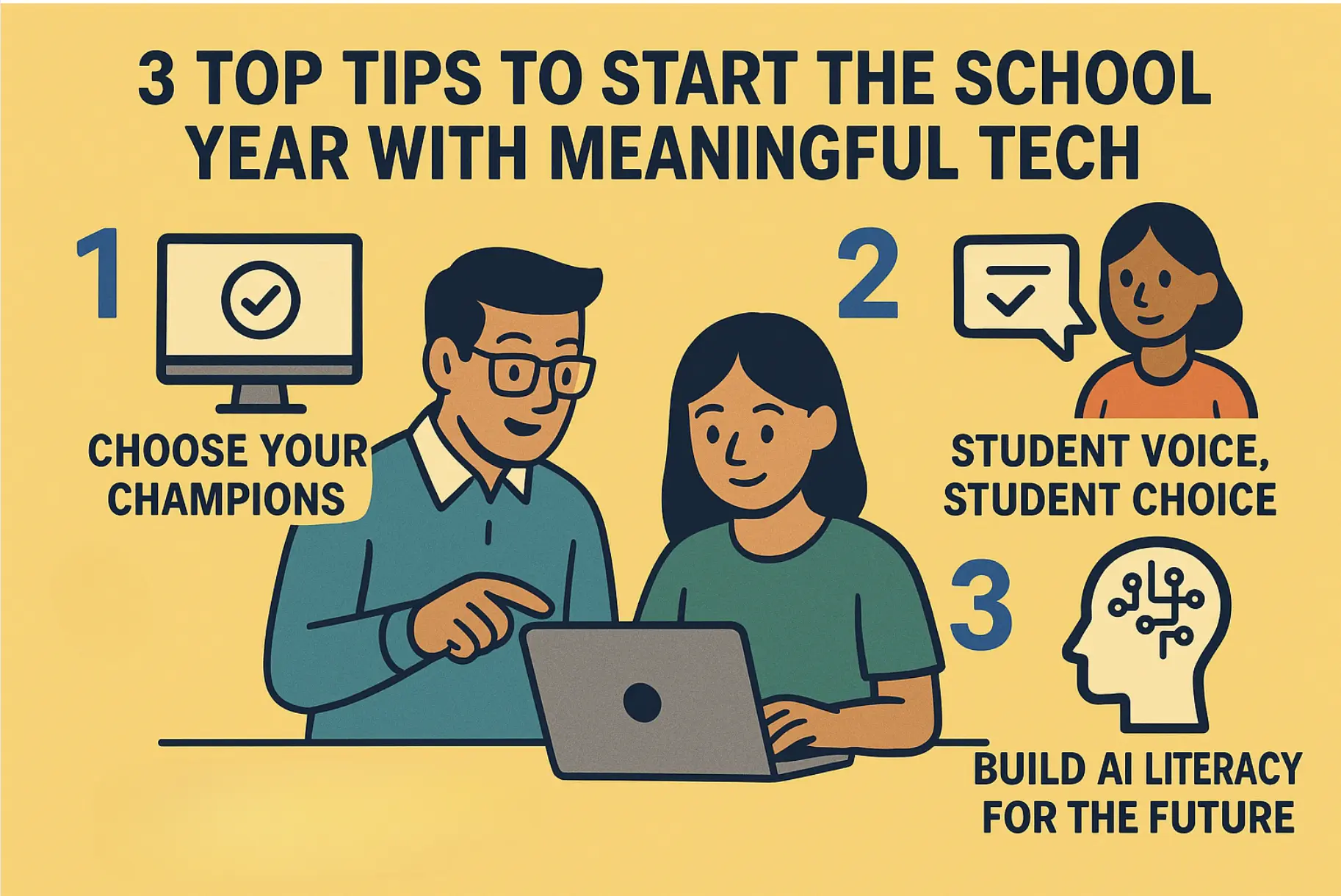
Here are three essential strategies to help you start the school year with purposeful, impactful technology use.
Tip 1: Choose Your Champions—Quality Over Quantity
One pitfall educators may experience is tool overload. Instead of trying to master every different platform you see on social media or in your colleagues orbits, identify 2-3 core technologies that align with your learning objectives and commit to mastering them. Bonus points if you can leverage a tool that your school or district already supports. They may already have resources, coaches, or trainings on those tools.
When selecting your tech champions, ask yourself: Does this tool solve a real problem in my classroom? Does it enhance learning in ways that wouldn’t be possible without it? Can I see myself and my students becoming genuinely proficient with it over time?
Remember, students learn better when they can develop deep familiarity with tools rather than constantly adapting to new interfaces. A well-implemented Google Workspace, learning management system, or creative platform will always outperform a scattered collection of half-learned applications.
Tip 2: Student Voice, Student Choice
The most meaningful technology integration happens when students have agency in their learning tools. Rather than mandating specific apps or platforms for every task, create opportunities for students to explore and advocate for the technologies that resonate with their learning styles and interests.
Consider starting the year with a “tech showcase” where students can demonstrate tools they already use for creativity, organization, or learning. Build choice into your assignments—let students choose between creating a video, podcast, infographic, or interactive presentation to demonstrate their understanding.
When students feel ownership over their digital tools, engagement naturally follows. They become collaborators in the learning process rather than passive recipients of predetermined tech experiences. This approach also prepares them for real-world scenarios where they’ll need to evaluate and select appropriate tools for different tasks.
Tip 3: Build AI Literacy for the Future
Artificial intelligence isn’t just coming to education—it’s already here. Rather than avoiding or fearing AI tools, this school year presents an opportunity to help students develop critical AI literacy skills that will serve them throughout their academic and professional lives.
Begin by becoming comfortable with AI tools yourself. Experiment with using AI for lesson planning, creating discussion questions, or generating multiple perspectives on complex topics. Once you’ve developed confidence with AI as an educator, you can better guide students in meaningful integration.
Make the most of well-crafted prompt stems when introducing AI to students. Try prompts like:
“Create a Socratic dialogue between [historical figure] and [modern expert] about [current issue] that reveals three different perspectives” or
“Generate a scenario where students must evaluate conflicting AI-generated arguments about [topic] and identify potential biases or gaps in reasoning” or
“Design a problem-solving activity where AI provides initial research, but students must synthesize, critique, and build upon that information to reach their own conclusions.”
Most importantly, focus on developing skills that complement AI: critical thinking, creativity, emotional intelligence, and complex problem-solving. When students understand both AI’s capabilities and limitations, they’re better positioned to use these tools thoughtfully and effectively.
Moving Forward with Purpose
Meaningful technology integration isn’t about keeping up with the latest trends—it’s about thoughtfully selecting, implementing, and reflecting on the tools that truly enhance learning. By focusing your efforts, amplifying student voice, and preparing learners for an AI-enhanced future, you’ll create a classroom environment where technology serves learning rather than distracting from it.
As you embark on this school year, remember that the most powerful educational technology is still an engaged teacher working with curious students. Everything else is just a tool to help make that magic happen.
Written by Tiffani Brown, Program Specialist at CUE. This post has AI-supported content that was human-reviewed.
As educators prepare for another school year, the promise and pressure of educational technology looms large. With countless apps, platforms, and digital tools vying for classroom attention, it’s easy to feel overwhelmed by the possibilities—or paralyzed by the choices. The key to meaningful tech integration isn’t about using more tools; it’s about using the right tools well.
Here are three essential strategies to help you start the school year with purposeful, impactful technology use.
Tip 1: Choose Your Champions—Quality Over Quantity
One pitfall educators may experience is tool overload. Instead of trying to master every different platform you see on social media or in your colleagues orbits, identify 2-3 core technologies that align with your learning objectives and commit to mastering them. Bonus points if you can leverage a tool that your school or district already supports. They may already have resources, coaches, or trainings on those tools.
When selecting your tech champions, ask yourself: Does this tool solve a real problem in my classroom? Does it enhance learning in ways that wouldn’t be possible without it? Can I see myself and my students becoming genuinely proficient with it over time?
Remember, students learn better when they can develop deep familiarity with tools rather than constantly adapting to new interfaces. A well-implemented Google Workspace, learning management system, or creative platform will always outperform a scattered collection of half-learned applications.
Tip 2: Student Voice, Student Choice
The most meaningful technology integration happens when students have agency in their learning tools. Rather than mandating specific apps or platforms for every task, create opportunities for students to explore and advocate for the technologies that resonate with their learning styles and interests.
Consider starting the year with a “tech showcase” where students can demonstrate tools they already use for creativity, organization, or learning. Build choice into your assignments—let students choose between creating a video, podcast, infographic, or interactive presentation to demonstrate their understanding.
When students feel ownership over their digital tools, engagement naturally follows. They become collaborators in the learning process rather than passive recipients of predetermined tech experiences. This approach also prepares them for real-world scenarios where they’ll need to evaluate and select appropriate tools for different tasks.
Tip 3: Build AI Literacy for the Future
Artificial intelligence isn’t just coming to education—it’s already here. Rather than avoiding or fearing AI tools, this school year presents an opportunity to help students develop critical AI literacy skills that will serve them throughout their academic and professional lives.
Begin by becoming comfortable with AI tools yourself. Experiment with using AI for lesson planning, creating discussion questions, or generating multiple perspectives on complex topics. Once you’ve developed confidence with AI as an educator, you can better guide students in meaningful integration.
Make the most of well-crafted prompt stems when introducing AI to students. Try prompts like:
“Create a Socratic dialogue between [historical figure] and [modern expert] about [current issue] that reveals three different perspectives” or
“Generate a scenario where students must evaluate conflicting AI-generated arguments about [topic] and identify potential biases or gaps in reasoning” or
“Design a problem-solving activity where AI provides initial research, but students must synthesize, critique, and build upon that information to reach their own conclusions.”
Most importantly, focus on developing skills that complement AI: critical thinking, creativity, emotional intelligence, and complex problem-solving. When students understand both AI’s capabilities and limitations, they’re better positioned to use these tools thoughtfully and effectively.
Moving Forward with Purpose
Meaningful technology integration isn’t about keeping up with the latest trends—it’s about thoughtfully selecting, implementing, and reflecting on the tools that truly enhance learning. By focusing your efforts, amplifying student voice, and preparing learners for an AI-enhanced future, you’ll create a classroom environment where technology serves learning rather than distracting from it.
As you embark on this school year, remember that the most powerful educational technology is still an engaged teacher working with curious students. Everything else is just a tool to help make that magic happen.
Written by Tiffani Brown, Program Specialist at CUE. This post has AI-supported content that was human-reviewed.
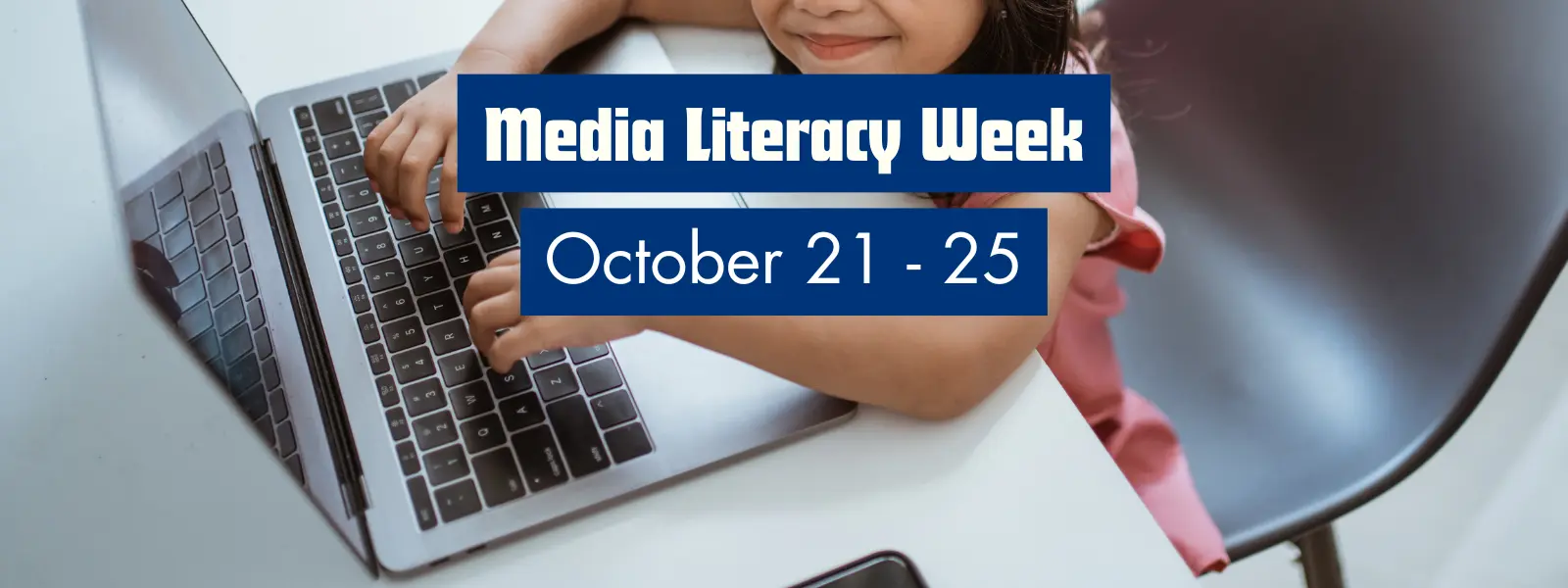
Join us for the 10th Annual U.S. Media Literacy Week, hosted by NAMLE (National Association for Media Literacy Education) from October 21-25! As tech leaders in your schools and districts, you already understand the importance of integrating innovative tools into your teaching. Media literacy is a crucial component of preparing students to critically analyze information and navigate the digital landscape with confidence.
Here’s how you can enhance your edtech practices and make media literacy a powerful tool in your classroom:
What It Offers: NAMLE, the official host of Media Literacy Week, provides an array of resources, including videos, webinars, and toolkits, all designed to help teachers incorporate media literacy into their lessons. They also host the Media Literacy Resource Showcase during the week, where educators can explore the latest tools and strategies for teaching these critical skills.
Free Teacher Accounts: No account is necessary, and many of NAMLE’s resources, webinars, and events are freely accessible on their website.
Why It’s Great for Innovators: NAMLE’s comprehensive materials support you in staying ahead of the curve, offering cutting-edge strategies and resources to integrate media literacy seamlessly into your technology-rich classroom.
What It Offers: AllSides for Schools provides a Media Bias Chart and curated news stories from across the political spectrum, helping students compare diverse perspectives on the same issue. This resource can be easily integrated into your existing digital curriculum to promote critical thinking and nuanced discussion in the classroom.
Free Teacher Accounts: Yes, AllSides offers free teacher accounts, giving you access to lesson plans, discussion guides, and a range of interactive media bias tools.
Why It’s Great for Innovators: You can use AllSides to create interactive lessons where students analyze bias using digital tools, enhancing their media literacy skills while promoting digital age thinking.
What It Offers: Checkology is an interactive platform that guides students through real-world scenarios to teach them how to recognize misinformation, evaluate sources, and understand the role of the media in a democracy. It’s an ideal resource for tech leaders who want to add more immersive, student-led learning experiences to their classroom.
Free Teacher Accounts: Yes, Checkology offers free accounts with access to most of its core media literacy lessons.
Why It’s Great for Innovators: Checkology’s gamified learning modules allow students to engage in simulations where they become media detectives, building crucial literacy skills while leveraging your classroom’s technology tools.
How This Supports Your Innovative Teaching Practices:
AllSides For Schools and Checkology both integrate seamlessly with the digital tools and learning management systems you’re already using, enabling you to enhance student engagement and create dynamic, interactive lessons.
By incorporating these media literacy tools, you’ll empower students to become critical thinkers and responsible digital citizens, preparing them for the challenges of a tech-driven world.
These resources promote student-centered learning, allowing you to facilitate discussions that foster a deeper understanding of the digital media landscape.
ISTE DigCit Competencies
In today’s digital world, every school needs a robust digital citizenship program to ensure students are safe, responsible, and proactive online. The ISTE Digital Citizenship Competencies are a great starting point, shifting the focus from what students shouldn’t do to empowering them with the skills and mindset to become thoughtful, empathetic digital citizens. By incorporating these competencies alongside media literacy tools like AllSides and Checkology, educators can create a holistic approach to teaching students how to navigate, evaluate, and contribute to the digital world. Explore ISTE’s comprehensive resources here.
Leverage these powerful tools during Media Literacy Week to inspire students to critically engage with the world around them while furthering your innovative teaching practices. Let’s continue to lead the way in digital education this October!
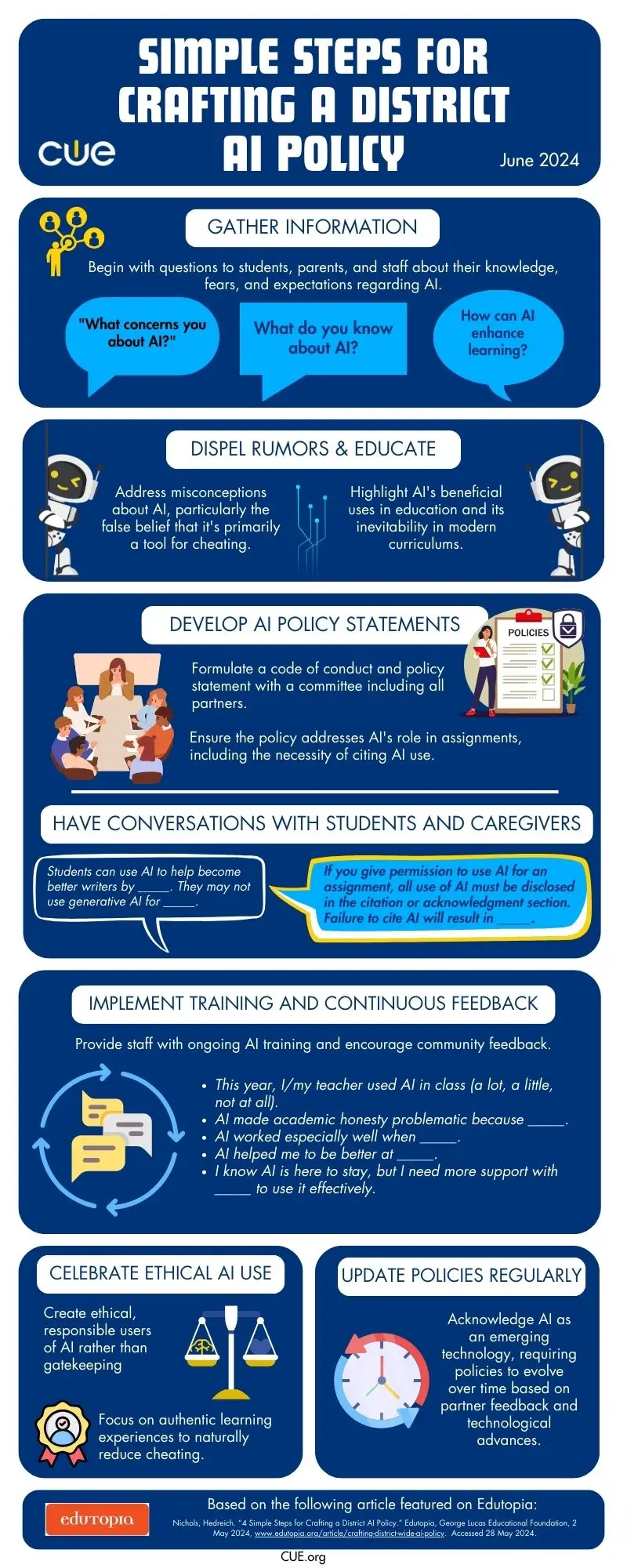
If you’ve been paying attention to how tech is transforming education this past year, you know AI is on the scene. It’s not just a buzzword anymore; it’s real, and it’s happening now. As exciting as it is, bringing AI into our schools isn’t just about flipping a switch. We need to be smart and strategic about it. Based on the Edutopia article, “4 Simple Steps for Crafting a District AI Policy,” this original CUE infographic includes tips covering everything from ethics to practical applications of AI.
Think about this infographic as a helpful conversation-starter to navigate the steps needed to develop policies in our AI world. It breaks down the complexities into manageable pieces, helping you and your leadership team understand concepts like data privacy, AI bias, and how to use these tools effectively. Feel empowered to discuss how AI has the potential to benefit everyone and align with your district’s mission and values. And feel free to remind your team that a strong and thoughtful policy will help avoid pitfalls like biased algorithms and security issues while promoting innovation.
So how can you get this information to the right people on your team?
Distribute through Email: Email distribution can provide direct access to the infographic, allowing leaders to review and reflect on the content at their convenience.
Here’s a sample AI Prompt for a related email that you can customize for your community:
You are an educator concerned about developing an AI policy for <your school district> but unable to draft the policy yourself. Compose an email to <your school leader> sharing an infographic that discusses simple steps to crafting a district AI policy. The email is the beginning of a conversation, so make sure the tone is <friendly, approachable, and action-oriented.> Offer to assist in the policy development and explain that you’re willing to meet to discuss this further.
Print Copies and Hand Them Out: Hand out printed copies of the infographic to your peers or drop it into their mailboxes. Having a printed copy of the resource on your desk can actually serve as a reminder to follow up about it and learn more.
Share at a Staff Meetings: Share the infographic during leadership meetings, weekly staff meetings, and professional development workshops. This opens up the floor for discussions and helps turn these ideas into action plans.
Get inspiration from these discussion stems and make them you own:
“A big takeaway from this infographic is how we need to think about ethical concerns, like…”
“To keep our district on the cutting edge with AI, we can use the tips in this infographic by…”
“Using the insights from this infographic in our plans, we can really boost our teaching methods by…”
“One key point is how we can use AI to better support our students’ learning needs, such as…”
“The infographic highlights the importance of involving caregivers in the AI policy process by…”
Discuss at a Personal Meeting: Make an appointment with your school leader/s and offer the infographic in advance. Making sure you both come to the meeting aware of the topic and the resource being shared increases confidence and creates a more comfortable starting place for discussion.
Find Someone to Share it on Your Behalf: Not in a position to meet with the school leaders who need this information? Seek out someone who can present it to the leadership team for you. Connecting with thought partners and advocates is a crucial step in building capacity.
You are already dialed into this important conversation by simply exploring this infographic. Now, you’re ready to spread this resource through multiple channels. Make sure you’ve done your part to ensure that everyone is prepared to use AI in a way that’s ethical, effective, and ultimately awesome for our students.
This week marks the 13th annual Global Accessibility Awareness Day (GAAD) which sets out to “get everyone talking, thinking, and learning about digital access/inclusion and people with different disabilities.” (GAAD, 2024) Let’s take a moment to think about why digital accessibility in education really matters. We can use this as an opportunity to ensure that all learners, especially those with disabilities, have equitable access to educational technologies.
This year, GAAD coincides with a pivotal update from the U.S. Department of Justice concerning digital accessibility. A new rule under Title II of the Americans with Disabilities Act (ADA) mandates that all state and local government services, including public education systems, adhere to the Web Content Accessibility Guidelines (WCAG) 2.1, Level AA. (Check out this resource which offers an overview of the WCAG 2.1 AA Standards.) For us educators, this rule is a game changer. It delineates clear compliance standards for digital content and mobile applications used in our classrooms. Whether it’s online coursework, educational apps, or instructional videos, these resources must be fully accessible to all students, including those with visual, hearing, motor, or cognitive impairments.
What does this mean for our daily teaching practices?
We must ensure that digital materials—like texts and multimedia—are designed with features like alt text for images, keyboard navigation capabilities, and captioning for videos. These are not just legal requirements; they are best practices that enhance learning for everyone. The rule specifies compliance timelines based on the size of the entity, giving schools a structured timeframe to make necessary updates.
This is our call to action to audit and enhance our educational tools and platforms.
Let’s view these new ADA requirements not just as a statutory obligation but as an opportunity to foster an inclusive learning environment. By prioritizing accessibility, we not only support our students with disabilities but also enrich our educational practices, making learning more engaging and effective for every student. As we move forward together, let’s pledge to meet these standards, celebrating them as foundational to educational equity. Together, we can make our digital educational spaces accessible for all, paving the way for a more inclusive future in education.
What is the current state of EdTech in schools? How can integrating technology in teaching deliver positive outcomes?
Find out answers to these questions and more on the latest episode of Learning Through Technology.
Join Pacific One Source on their recent podcast episode as they connect with our own Christine Feenstra, Executive Director at CUE.
Insights from the podcast:
Discover how CUE plays a crucial role in helping schools and districts get a return on their technology investments.
Learn how professional learning, mentorship, and networking opportunities are key in driving educational outcomes.
Get ready for Spring CUE and discover how it fuels innovation and drives positive outcomes for educators.
Let Christine, along with hosts Alex and Bob, take you on a journey as they share stories of their favorite teachers and the impact they had on their education.