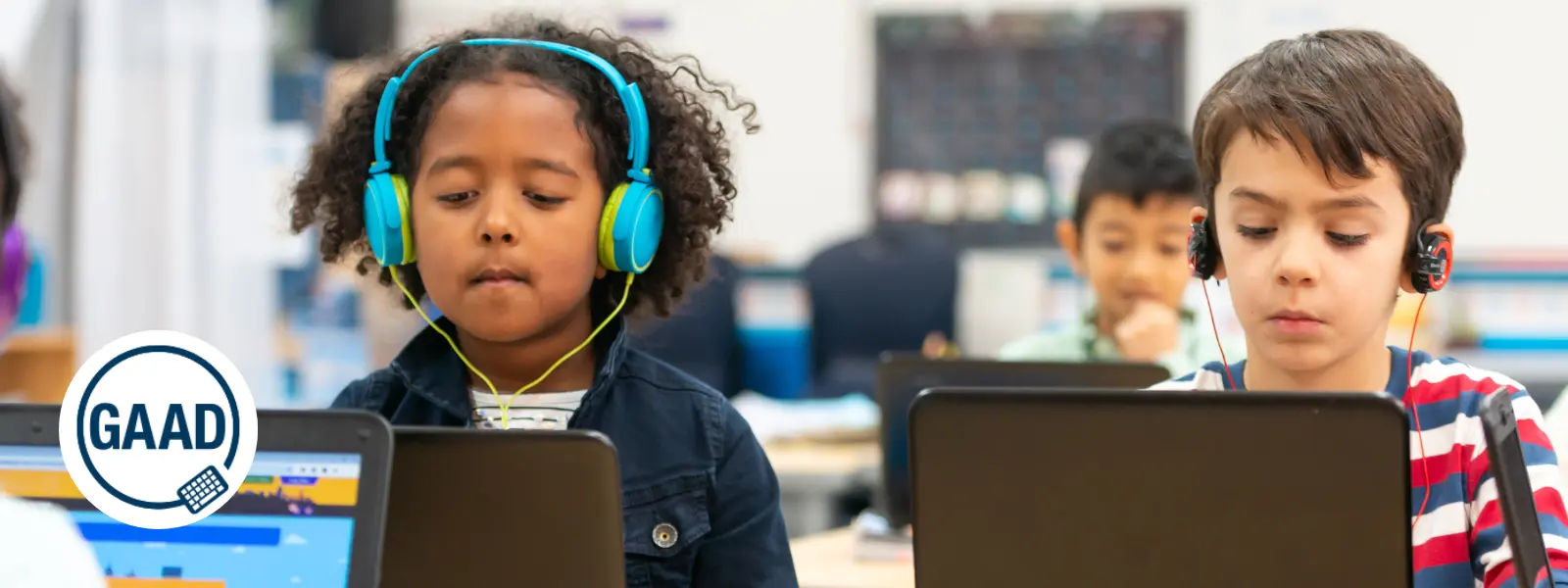
Breaking Barriers: The Impact of ADA’s New Digital Accessibility Rules on Education

This week marks the 13th annual Global Accessibility Awareness Day (GAAD) which sets out to “get everyone talking, thinking, and learning about digital access/inclusion and people with different disabilities.” (GAAD, 2024) Let’s take a moment to think about why digital accessibility in education really matters. We can use this as an opportunity to ensure that all learners, especially those with disabilities, have equitable access to educational technologies.

This year, GAAD coincides with a pivotal update from the U.S. Department of Justice concerning digital accessibility. A new rule under Title II of the Americans with Disabilities Act (ADA) mandates that all state and local government services, including public education systems, adhere to the Web Content Accessibility Guidelines (WCAG) 2.1, Level AA. (Check out this resource which offers an overview of the WCAG 2.1 AA Standards.) For us educators, this rule is a game changer. It delineates clear compliance standards for digital content and mobile applications used in our classrooms. Whether it’s online coursework, educational apps, or instructional videos, these resources must be fully accessible to all students, including those with visual, hearing, motor, or cognitive impairments.

What does this mean for our daily teaching practices? 

We must ensure that digital materials—like texts and multimedia—are designed with features like alt text for images, keyboard navigation capabilities, and captioning for videos. These are not just legal requirements; they are best practices that enhance learning for everyone. The rule specifies compliance timelines based on the size of the entity, giving schools a structured timeframe to make necessary updates. 

This is our call to action to audit and enhance our educational tools and platforms.

Let’s view these new ADA requirements not just as a statutory obligation but as an opportunity to foster an inclusive learning environment. By prioritizing accessibility, we not only support our students with disabilities but also enrich our educational practices, making learning more engaging and effective for every student. As we move forward together, let’s pledge to meet these standards, celebrating them as foundational to educational equity. Together, we can make our digital educational spaces accessible for all, paving the way for a more inclusive future in education.
Learning and Growing Together: The Power of Conferences to Ignite Personal and Professional Growth with Christine Feenstra, Executive Director of CUE

What is the current state of EdTech in schools?
How can integrating technology in teaching deliver positive outcomes?

Find out answers to these questions and more on the latest episode of Learning Through Technology.

Join Pacific One Source on their recent podcast episode as they connect with our own Christine Feenstra, Executive Director at CUE.

Insights from the podcast:

  • Discover how CUE plays a crucial role in helping schools and districts get a return on their technology investments.
  • Learn how professional learning, mentorship, and networking opportunities are key in driving educational outcomes.
  • Get ready for Spring CUE and discover how it fuels innovation and drives positive outcomes for educators.

Let Christine, along with hosts Alex and Bob, take you on a journey as they share stories of their favorite teachers and the impact they had on their education.

Thank you to Pacific One Source and ViewSonic for sponsoring the episode and helping to make the podcast possible!

Welcome to the CALIE Community

Educators are among the most powerful leaders in our state.
We create learning that matters, adapt to constant change, and inspire possibility every single day.

For more than four decades, the CUEmmunity harnessed that power by sharing ideas at conferences, learning from each other’s classrooms, and leaning on one another through times of change. We grew into a community of educators who believe in the power of innovation and in the strength that comes from not doing this work alone.

But innovation in education isn’t just about tools or technology. It’s about rethinking how schools adapt, how teachers lead, and how educators connect and support each other in the real work of teaching and learning.

That’s why we evolved. CUE is now CALIE: the California Association for Leading Innovation in Education.

CALIE exists to give teachers, school leaders, and innovators the confidence, tools, and experiences to design classrooms and schools that really work for today’s learners, while also amplifying their professional and leadership goals.

Our Belief

We believe in the power of educators.
We are the local leaders sparking meaningful learning, even when the challenges are tough.
We push big ideas forward,
We lean on each other for support

We know that innovation in education is about people, not just technology.
It’s about using innovation to break down barriers to learning.
It’s about unlocking potential.

And we believe that together, anything is possible.

What’s Ahead

CALIE’s expanded mission and vision makes it possible for us to do more to support, inspire, and empower more educators than ever before. Over the next year you’ll gain new ways to learn, lead, and connect, including:

  • The CALIE Certified Educator Program builds skills in instructional design, educational technology, and schoolwide improvement strategies, preparing you to drive change wherever your career takes you.
  • The CALIE AI Leadership Academy empowers educators and school leaders to build knowledge, skills, and strategies for ethical, impactful integration of artificial intelligence in education.
  • A stronger statewide network that makes sure you are heard, supported, and inspired.

Whether you’ve been with us for years or you’re just discovering this community, we’re glad you’re here.

Welcome to CALIE. Let’s spark meaningful learning, together.